
share: 


A customer satisfaction guarantee (often worded as “satisfaction guaranteed”) is a promise that if a customer isn’t happy with a product or service, the business will make it right with a refund, replacement, repair or credit. It shifts the risk of buying from the customer to the business.
Customer satisfaction guarantees aren’t just marketing fluff—they’re strategic weapons that transform skeptical prospects into loyal customers.
When done right, they remove the biggest barrier between potential customers and their wallets: risk.
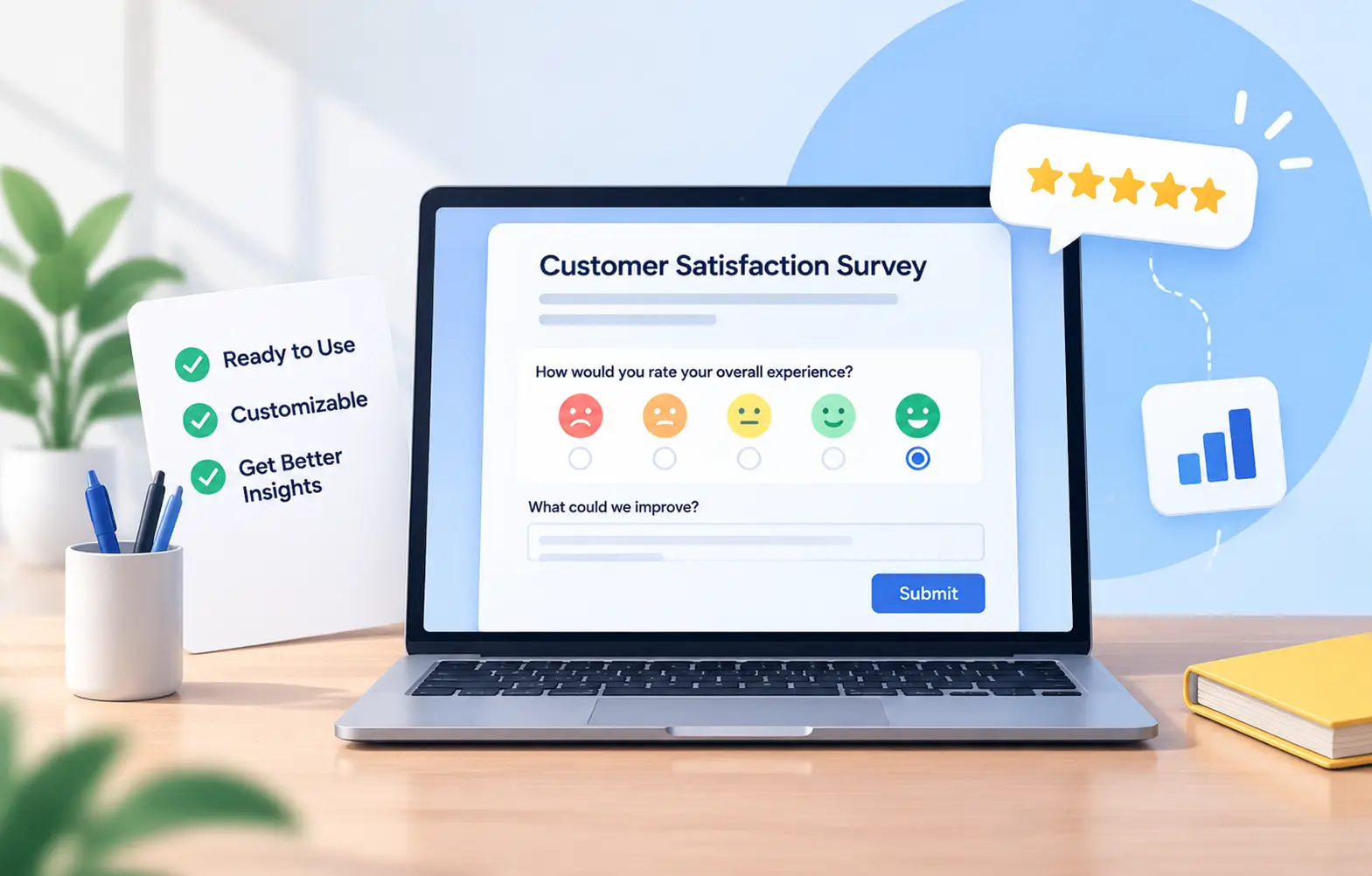
The confidence to offer customer satisfaction guarantees comes by way of feedback collection. Businesses can move beyond good intentions by systematically collecting feedback like CSAT and NPS at every key moment—after a support interaction, a purchase, or an onboarding experience. This isn’t about checking a box; it’s about opening a two-way channel where customers feel heard and valued.
What is a Customer Satisfaction Guarantee?
A customer satisfaction guarantee is a promise from a business that if you’re not happy with your purchase, you’ll get your money back, a replacement, or some form of remedy—no strings attached.
It’s more than a friendly assurance; it’s a clear signal that the company stands behind its product or service, putting your peace of mind front and center.
This kind of guarantee flips the script, shifting the risk away from the customer and onto the business, making it far easier for people to say “yes” with confidence.
Improving Guarantees Through Better Feedback Collection
Guarantees are only as strong as the actions behind them. To truly improve your satisfaction guarantees, you need more than a bold promise—you need a feedback loop that captures real experiences, integrates insights seamlessly, and triggers meaningful change, all without data ever leaving your core platform.
Start by collecting feedback at every critical touchpoint: after support cases close, post-purchase, during onboarding, or following a product update.
With unlimited responses and multi-channel delivery—email, chat, web, SMS, and more—you gather honest input from every corner of your customer base.
Next, integrate this feedback directly into your customer records in real time. No sync delays, no manual steps—just instant enrichment of your existing data, giving you one true view of each relationship.
Then, act fast. When you resolve issues promptly and transparently, you transform your guarantees from marketing speak into a living promise customers can trust.
Ready to turn your guarantees into a true competitive edge? Start closing the feedback loop and see the difference it makes.
8 Types of Satisfaction Guarantees (With Examples)
Money-Back Guarantees
The gold standard of customer assurance, money-back guarantees offer full refunds within specified timeframes. Most businesses stick to 30-90 day windows, but some push boundaries for competitive advantage.
Zappos built its reputation on easy returns, and still offers free returns within 60 days for items in new condition. That addresses the biggest problem with buying shoes online: you can’t try them on first.
L.L.Bean goes further: products bought directly from L.L.Bean can be returned within one year for a refund with proof of purchase.
Implementation best practices:
- Match timeframe to product evaluation needs
- Make the refund process simple and fast
- Train customer service teams to honor guarantees cheerfully
- Track usage patterns to optimize terms
Free Trial Guarantees
Free trials remove the biggest barrier to purchase: having to pay before experiencing value. Casper’s 100-night mattress trial is a well-known example: customers can return a mattress for a full refund within 100 nights, after a 30-night adjustment period, because you can’t know if a mattress works until you’ve slept on it for weeks.
This model works exceptionally well for subscription services where ongoing value needs to be demonstrated. The trial period becomes a showcase for your product’s benefits rather than a sales pitch.
Best-Price Guarantees
Price-conscious customers love knowing they’re getting the best deal available. Best-price guarantees promise to match or beat competitor pricing, removing the need for extensive comparison shopping.
Many retailers offer a price-adjustment guarantee: if the price drops within a set period after purchase, they refund the difference. It lets customers buy now instead of waiting for a sale.
Lifetime Guarantees
Lifetime guarantees represent the ultimate confidence statement. Patagonia’s Ironclad Guarantee is a well-known example: if you’re not satisfied with a Patagonia product, you can return it for repair, replacement or refund, with repair tried first. Normal wear and tear isn’t covered, which keeps the promise sustainable.
These guarantees work best when product failure is rare but catastrophic to customer trust. They’re particularly effective for premium-priced items where longevity is a key value proposition.
Support Service Guarantees
Support guarantees promise a level of help, such as a response within a set time, a named contact, or a fix within an agreed window. They reduce the anxiety of buying complex products, because customers know help will be there when something goes wrong.
Response time commitments work particularly well in B2B environments where downtime has measurable costs. Promising 4-hour response times for critical issues can justify premium pricing.
Safety and Security Guarantees
Digital-age anxieties around privacy and security create opportunities for safety-focused guarantees. Airbnb’s AirCover protection model addresses both physical safety concerns and financial risks associated with property damage.
Data security assurances have become table stakes in many industries. Customers need to know their information is protected, and guarantees provide concrete evidence of your commitment.
Performance Guarantees
Outcome-based service promises tie your success directly to customer results. This model works exceptionally well in consulting, marketing services, and other areas where success can be measured objectively.
SLA-backed reliability commitments provide measurable standards that customers can track. Fairness guarantees on billing work in a similar way: Slack’s Fair Billing Policy stops charging for members who haven’t used Slack in more than 28 days and gives prorated credits instead.
Extreme Satisfaction Guarantees
“100% happiness or 100% refund” models transfer all risk to your brand. These extreme positions can create powerful differentiation but require exceptional operational capabilities to deliver consistently.
When you promise to make everything right regardless of circumstances, you’re essentially becoming your customer’s insurance policy. This level of commitment can justify premium pricing and create fierce loyalty.
Satisfaction Guarantee Wording Examples
Use these statements as a starting point for your own policy. Replace the time periods and remedies with terms your business can deliver every time, and check consumer protection rules in each market you sell to.
- 100% satisfaction guarantee: “If you’re not 100% satisfied with your purchase, contact us within 30 days and we’ll refund you in full or replace it. No questions asked.”
- Money-back guarantee: “Try it for 30 days. If it isn’t right for you, return it in its original condition for a full refund.”
- Service guarantee: “If our work doesn’t meet the standards we agreed, we’ll redo it at no extra cost. If we still can’t get it right, we’ll refund the fee for that service.”
- Response-time guarantee: “We respond to every critical support request within 4 business hours. If we miss that target, we’ll credit 10% of that month’s fee.”
- Free trial guarantee: “Start a 14-day free trial with full access. No credit card needed, and you can cancel anytime.”
- Lifetime guarantee: “We stand behind everything we make. If a product fails because of a defect in materials or workmanship, we’ll repair or replace it.”
How to Measure Whether Your Guarantee Works
A guarantee is a promise, so measure whether customers feel it is being kept, and whether it is helping or hurting the business:
- Survey every claim: send a short CSAT survey after each refund, replacement or repair, asking how satisfied the customer was with how it was handled.
- Ask why: add one open question about the reason for the claim. Patterns in the answers point to product or service problems you can fix.
- Track the claim rate: monitor claims as a share of sales by product or service. A sudden rise is an early warning sign.
- Compare loyalty: compare the NPS of customers who used the guarantee with those who didn’t. A well-handled claim often builds loyalty rather than losing it.
- Review regularly: look at the results monthly and adjust your terms, training or product as needed.
With SurveyVista, these surveys run inside Salesforce, so each response is linked to the customer’s case, order and account. You can trigger a survey automatically when a refund case closes and alert the account owner when a customer is unhappy with the result.
Frequently Asked Questions
What’s the difference between a money-back guarantee and a satisfaction guarantee?
A money-back guarantee specifically promises refunds if customers aren’t happy, while satisfaction guarantees can include various remedies like replacements, service credits, or performance improvements. Money-back guarantees are more straightforward, but satisfaction guarantees offer flexibility in how you resolve customer issues.
How long should my customer satisfaction guarantee period be?
Match your guarantee period to how long customers need to evaluate your product’s value. Simple products might need 30 days, while complex services could require 90+ days. Consider your industry standards, but focus on giving customers enough time to experience real benefits.
Will offering guarantees hurt my profit margins?
Well-designed guarantees typically increase profits through higher conversion rates and customer lifetime value. Most businesses see improvements that far outweigh refund costs. The key is matching guarantee terms to your operational capabilities and product quality.
How do I prevent customers from abusing my satisfaction guarantee?
Set clear, specific terms about what qualifies for guarantee claims. Track usage patterns to identify potential abuse. Most customers use guarantees legitimately—focus on making the process smooth for genuine claims rather than creating barriers that hurt honest customers.
Should I make my guarantee more generous than my competitors?
Focus on addressing your customers’ specific concerns rather than just beating competitor terms. A targeted guarantee that solves real customer problems works better than a generic “better” guarantee. Consider your operational capacity and what you can deliver consistently.
More Like This



Rajesh Unadkat 
Founder and CEO
Rajesh is the visionary leader at the helm of SurveyVista. With a profound vision for the transformative potential of survey solutions, he founded the company in 2020. Rajesh's unwavering commitment to harnessing the power of data-driven insights has led to SurveyVista's rapid evolution as an industry leader.
Connect with Rajesh on LinkedIn to stay updated on the latest insights into the world of survey solutions for customer and employee experience management.