share: 


A customer finishes a support call. The agent closes the case. The contact center moves on to the next interaction.
But one important question often remains unanswered:
How did the customer actually feel about the experience?
For many organizations, customer feedback is collected too late, sent through disconnected channels, or reviewed separately from the service interaction that created it. By the time feedback arrives, the context is often missing. The call, the case, the agent, the queue, and the customer journey are no longer connected in one clear view.
According to a Salesforce Report, 88% of service professionals say that having access to connected customer data is critical to delivering the personalized experiences customers now expect. Yet most organizations are still stitching together feedback from disconnected survey tools, email follow-ups, and manual case reviews.
SurveyVista helps solve this challenge by extending feedback capture into the existing service flow powered by Amazon Connect and Service Cloud Voice.
With SurveyVista, organizations can automatically collect timely, contextual feedback and connect those responses directly back to Salesforce records. This gives service teams a better way to measure customer satisfaction, identify service gaps, and take action where it matters most.
Bringing Feedback into the Existing Contact Center Flow
Amazon Connect helps organizations manage customer conversations through configurable contact flows. These flows define the customer experience from start to finish, including routing, prompts, queues, transfers, and IVR interactions.
Service Cloud Voice brings the voice experience into Salesforce, allowing agents to work from a unified service console with access to customer, case, and interaction data.
SurveyVista adds the next layer: feedback capture, sentiment analysis, and experience measurement.
While post-call surveys are one of the most common use cases, SurveyVista can also be embedded directly into IVR journeys before a customer ever reaches an agent. This allows organizations to gather valuable information, qualify customer intent, measure effort, and personalize service experiences earlier in the interaction.
This creates a seamless experience for both the organization and the customer.
The customer provides feedback at the most relevant moment.
The agent continues working in their familiar Salesforce environment.
The service leader gains actionable insights connected directly to service operations.
Why This Matters for Service Organizations
Customer service teams already collect a large amount of operational data. They may know how many calls were answered, how long customers waited, which agent handled the case, and whether the case was closed.
But according to Forrester’s Customer Experience Index, there is a persistent gap between how organizations measure service performance and how customers actually perceive the experience.
But operational data alone does not always reveal the complete customer experience.
- A call may be resolved quickly, but the customer may still feel frustrated.
- A case may be closed, but the customer may not feel heard.
- A service process may appear efficient, but feedback may reveal recurring friction.
SurveyVista helps organizations bridge this gap by connecting customer sentiment directly to the service journey.
When feedback is captured at key moments throughout the customer interaction and linked to Salesforce data, organizations gain a clearer understanding of not only what happened, but how customers felt about the experience.
Beyond Post-Call Surveys: Additional IVR Use Cases
Many organizations immediately think of post-call surveys when discussing IVR feedback. However, SurveyVista can support several other valuable use cases directly within Amazon Connect contact flows.
Here are the most impactful ones.
-
Customer Effort Measurement Before Agent Transfer
Before routing a customer to an agent, the IVR can ask:
“Have you already tried resolving this issue through our website, mobile app, or self-service portal?”
This helps organizations understand customer effort before the interaction begins.
If customers repeatedly indicate they attempted self-service first, leaders can identify gaps in digital channels and improve self-service experiences.
-
Intent Validation and Routing Optimization
Organizations often assume they know why customers are calling.
SurveyVista can collect structured responses within the IVR to validate customer intent before routing.
For example:
- Billing inquiry
- Technical support
- Product information
- Complaint
- Account management
Comparing IVR selections with actual case outcomes helps organizations improve routing accuracy and reduce transfers.
-
Real-Time Customer Sentiment Check
Before connecting to an agent, customers can be asked:
“How would you describe your experience today?”
Responses can indicate whether the customer is already frustrated, neutral, or satisfied before the conversation begins.
This information can be surfaced to agents in Salesforce, helping them tailor their approach and prioritize empathy when needed.
-
Self-Service Experience Feedback
Organizations invest heavily in self-service channels such as websites, chatbots, mobile apps, and knowledge bases.
According to Salesforce research, 61% of customers prefer to try self-service before contacting a live agent, making this feedback especially valuable for improving digital deflection programs.
When customers call after attempting self-service, SurveyVista can ask:
“Were you able to find the information you needed online?”
This provides direct insight into why customers abandon self-service channels and seek live assistance.
-
Queue Experience Monitoring
Long wait times can significantly impact customer satisfaction.
While customers are waiting in queue, SurveyVista can collect feedback such as:
- Was it easy to find the correct support number?
- Did the IVR menu help you reach the right department?
- How satisfied are you with the wait experience so far?
This helps organizations identify friction points before customers even speak with an agent.
-
Service Recovery During the Call Journey
If a customer indicates dissatisfaction during an IVR interaction, Amazon Connect can dynamically adjust routing.
For example:
- Route dissatisfied customers to specialized teams.
- Prioritize high-value customers.
- Escalate complaints immediately.
- Trigger supervisor involvement.
Instead of waiting until after the interaction to discover dissatisfaction, organizations can proactively address issues in real time.
How SurveyVista Works with Amazon Connect and Service Cloud Voice
SurveyVista supports a feedback workflow that aligns with an organization’s existing contact center process.
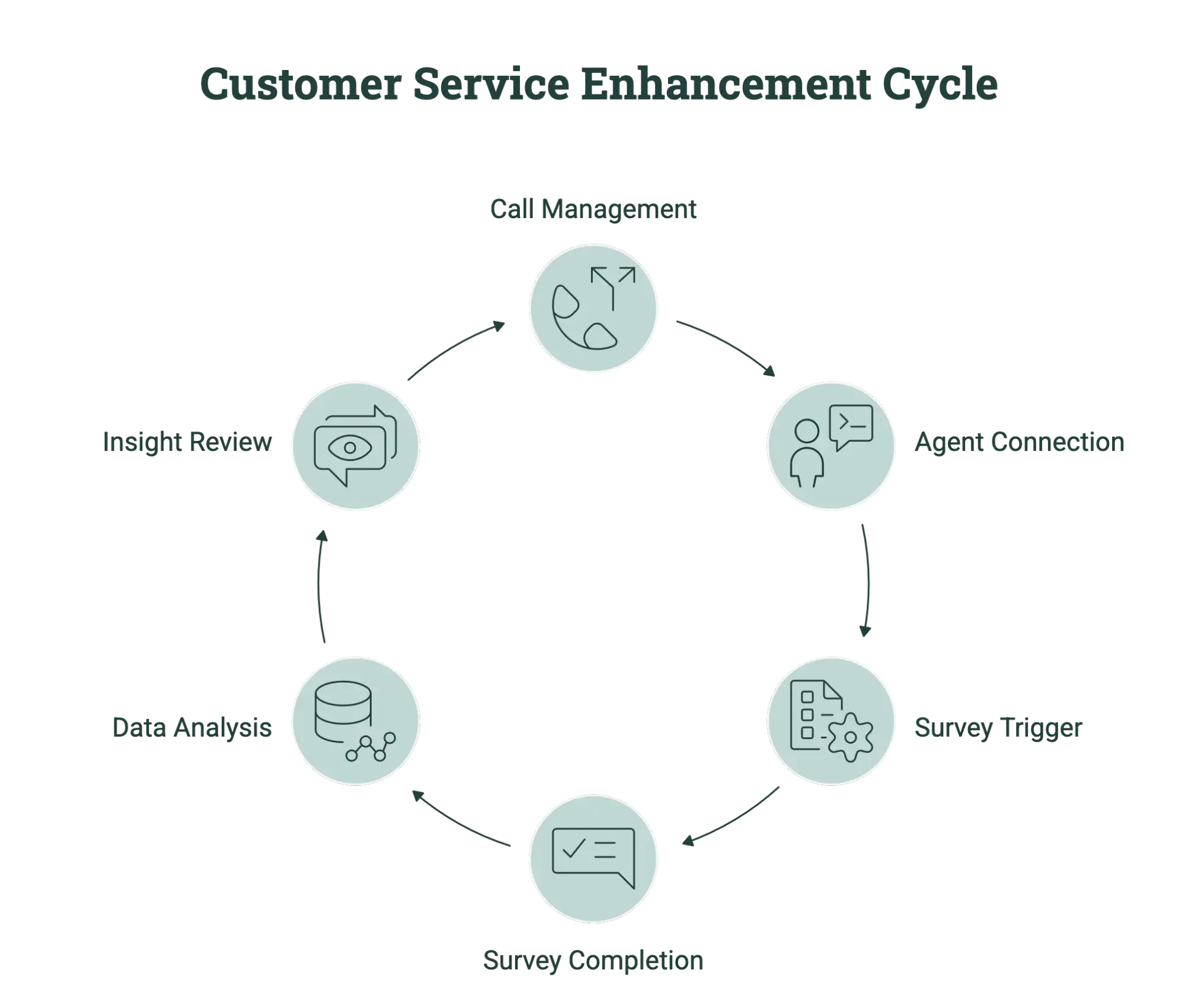
A typical flow may look like this:
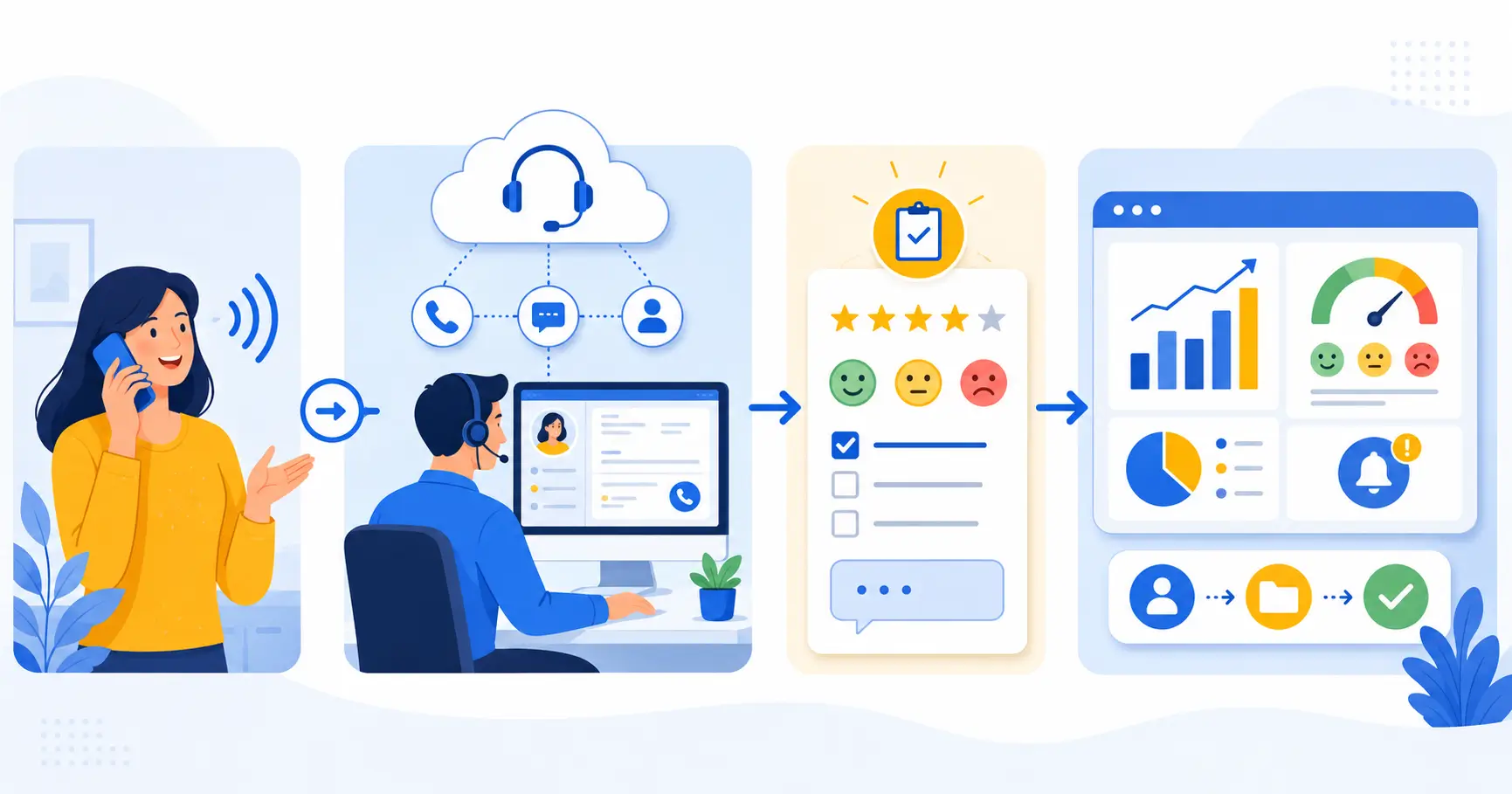
1) A customer calls and Amazon Connect manages the flow, IVR, routing, and queue logic.
2) The call connects to an agent through Service Cloud Voice, with full customer and case context available inside Salesforce.
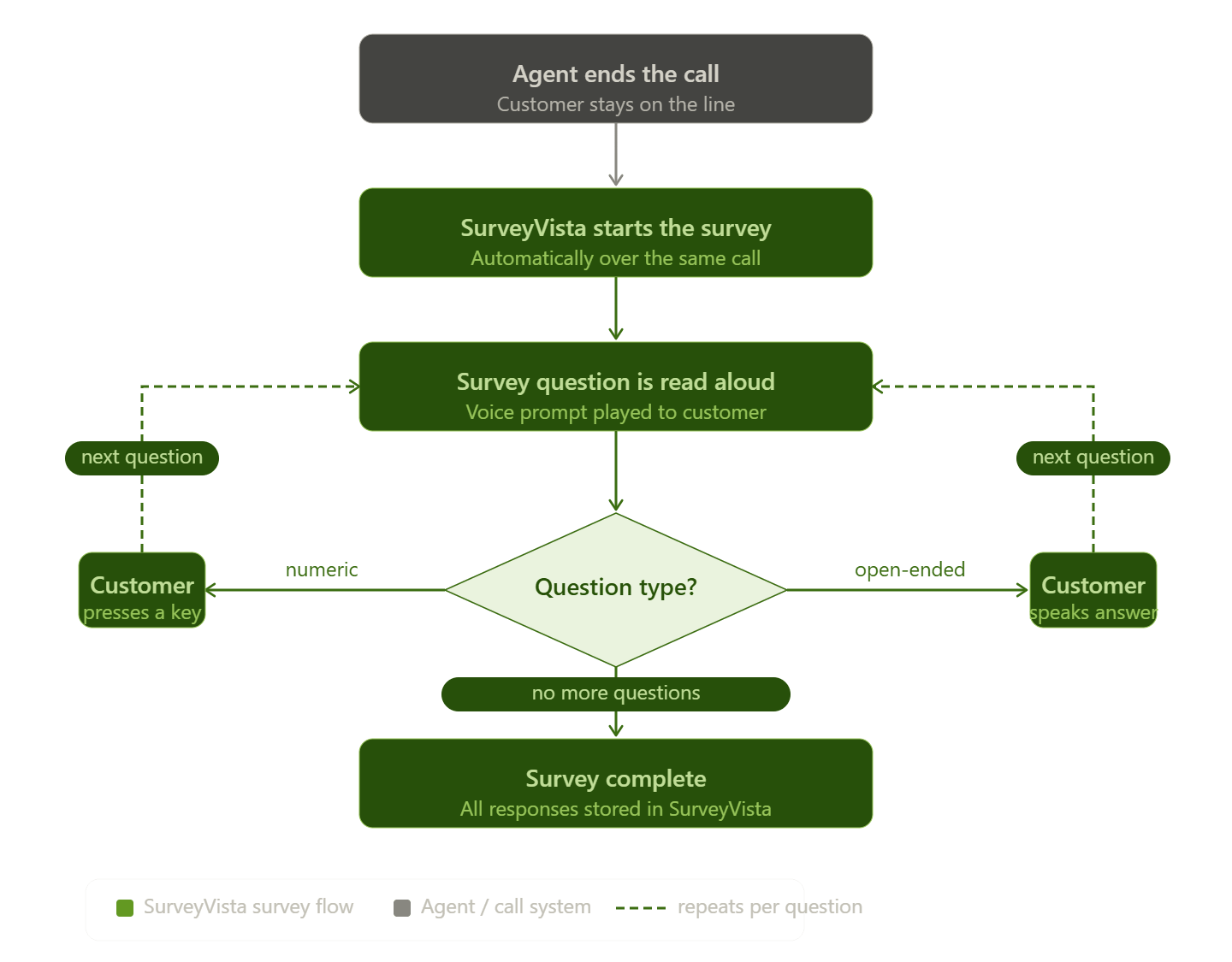
3) SurveyVista automatically triggers a contextual post-call IVR survey once the interaction ends.
4) The customer completes the survey.
5) SurveyVista analyzes responses like CSAT, NPS, sentiment, and maps results directly to Salesforce records, including the VoiceCall object.
6) Service leaders review insights and take action.
This allows organizations to maintain their existing Amazon Connect flow while adding a powerful feedback and customer experience layer through SurveyVista.
Integration Flow Diagram
Example Use Case: Post-Call Customer Satisfaction
Imagine a customer contacts support about a billing issue.
Amazon Connect routes the call to the appropriate queue. The agent receives the call in Service Cloud Voice and views the customer record, related cases, and account information inside Salesforce. After the conversation, the case is updated and the call is completed.
Instead of sending an email survey days later, SurveyVista automatically launches a post-call IVR survey.
The survey may ask:
- Was your issue resolved?
- How satisfied were you with the support experience?
- How easy was it to get help?
- Would you recommend our company to others?
- Do you have additional comments?
SurveyVista captures the responses and automatically maps CSAT scores, NPS ratings, comments, and sentiment results back to the VoiceCall record and related Salesforce customer records.
This gives leaders a complete view of the interaction, combining operational metrics with customer perception.
They can see which teams are performing well, where customers are experiencing friction, and which processes require improvement.
Native Data Mapping: Eliminating Data Silos
One of the biggest challenges organizations face is keeping customer feedback connected to operational data. As Salesforce Ben notes in their Service Cloud Voice overview, the real power of the platform is realized when voice interaction data is unified with CRM records, rather than living in a separate telephony system. SurveyVista extends this principle to customer feedback.
Survey responses such as:
- CSAT scores
- NPS ratings
- Customer comments
- Survey completion status
- Sentiment scores
- IVR responses
- Customer effort indicators
can be mapped directly back to:
- VoiceCall records
- Cases
- Contacts
- Accounts
- Other Salesforce objects
This eliminates data silos and ensures customer feedback becomes part of the complete customer service record.
Instead of searching across multiple systems, service teams can view customer interactions and feedback in one place.
Sentiment Analysis: Understanding More Than Scores
Customer satisfaction scores tell part of the story. SurveyVista’s Sentiment Analysis helps organizations understand the emotional tone behind customer feedback.
By analyzing survey responses and comments, SurveyVista can identify whether customer sentiment is positive, neutral, or negative.
This provides additional context beyond traditional metrics such as CSAT and NPS.
For example:
- A customer may provide a moderate score but leave highly negative comments.
- A customer may report satisfaction while highlighting a process issue.
- A customer may express frustration that requires immediate attention.
Sentiment Analysis helps organizations uncover these insights faster and prioritize the right actions.
Closed-Loop Workflows: Turning Feedback into Action
According to the Gartner Customer Service and Support research hub, organizations that proactively respond to negative customer feedback are significantly more likely to retain at-risk customers than those that rely on passive score monitoring.
SurveyVista enables closed-loop workflows that automatically respond to customer feedback.
Organizations can configure business rules so that:
- Low CSAT scores trigger immediate follow-up.
- Negative sentiment creates a priority service case.
- Escalation teams receive alerts for dissatisfied customers.
- Managers are notified when critical feedback is received.
- Recovery workflows are launched automatically.
This ensures that customer concerns do not sit unnoticed in reports.
Instead, feedback becomes an active part of the service process, helping organizations resolve issues faster and improve customer loyalty.
Smarter Feedback Based on Business Context
Not every customer interaction should receive the same survey.
A billing call may require different questions than a technical support call.
A high-priority customer may need a specialized feedback process.
A complaint case may require immediate escalation if the customer reports dissatisfaction.
A resolved case may only need a brief satisfaction check.
SurveyVista helps organizations design feedback experiences that are relevant and meaningful.
Survey logic can be aligned with Salesforce data such as:
- Case type
- Case status
- Account type
- Customer segment
- Queue
- Agent
- Service channel
- Call outcome
- Priority level
- Product or service category
This helps organizations avoid generic surveys and create feedback journeys that reflect the actual customer experience.
Helping Leaders Move from Data to Action
The real value of feedback is not only in collecting responses. It is in knowing what to do next.
SurveyVista helps organizations transform customer responses into actionable insights. Service leaders can monitor satisfaction trends, identify recurring issues, and understand where the customer experience is improving or declining.
For example, teams can use SurveyVista feedback to identify:
- Queues with lower satisfaction scores
- Case types that create repeated frustration
- Agents who may need coaching or recognition
- Customers who require immediate follow-up
- Processes that create delays or confusion
By combining Sentiment Analysis with closed-loop workflows, organizations can move from reactive support to proactive customer experience management.
A Better Experience for Agents and Customers
A strong feedback process should not create extra work for agents or friction for customers.
SurveyVista supports a streamlined model by working with the systems service teams already use. Agents continue managing calls and cases in Salesforce. Customers provide feedback through familiar IVR experiences. Managers review insights directly within their operational workflows.
This makes feedback part of the service lifecycle rather than a separate activity.
For customers, the experience feels timely and relevant.
For agents, the workflow remains familiar.
For leaders, the insights become easier to trust and act upon.
Key Benefits for Organizations
SurveyVista helps organizations using Amazon Connect and Service Cloud Voice strengthen their service operations in several important ways.
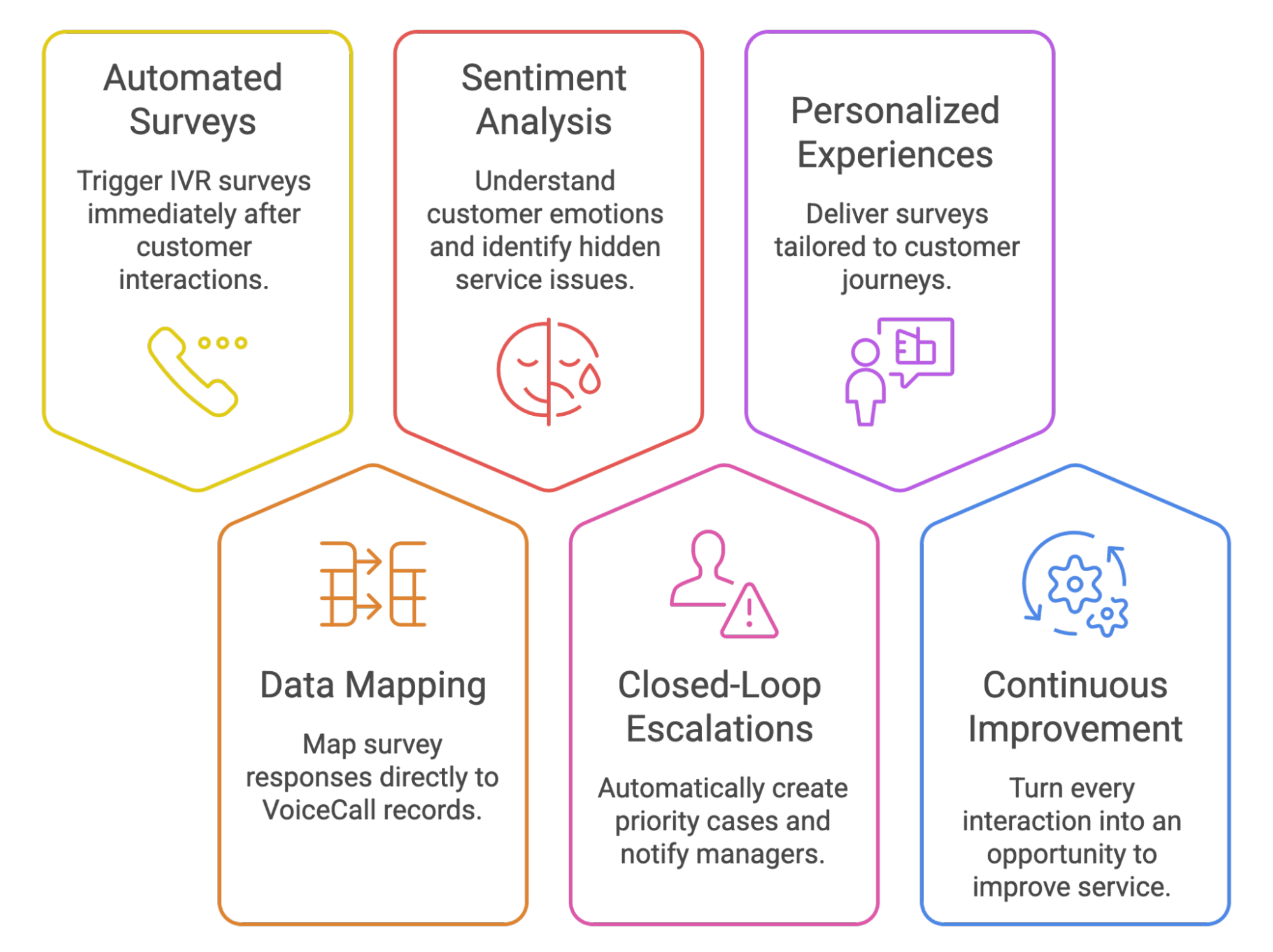
- Automated Post-Call Surveys: Trigger contextual IVR surveys immediately after customer interactions while the experience is still fresh.
- Native Salesforce Data Mapping: Map survey responses directly to VoiceCall records and customer data, eliminating disconnected feedback systems.
- Sentiment Analysis: Understand customer emotions and identify hidden service issues beyond traditional satisfaction scores.
- Closed-Loop Escalations: Automatically create priority cases and notify managers when negative feedback or poor sentiment is detected.
- Personalized Feedback Experiences: Deliver surveys tailored to customer journeys, case types, and interaction outcomes.
- Continuous Service Improvement: Turn every customer interaction into an opportunity to improve service quality and customer loyalty.
Why SurveyVista Fits Well into the Amazon Connect and Salesforce Ecosystem
Organizations invest in Amazon Connect and Service Cloud Voice to create a more connected, efficient, and intelligent service experience.
SurveyVista complements that investment by helping organizations understand the customer’s perspective after every interaction.
It does not require teams to redesign their contact center operations. Instead, it extends the value of existing workflows by adding feedback collection, sentiment analysis, native Salesforce integration, and automated service recovery processes.
- Amazon Connect manages the contact journey.
- Service Cloud Voice supports the agent experience in Salesforce.
- SurveyVista captures, analyzes, and acts on customer feedback.
Together, they create a complete customer experience feedback loop.
From Call Completion to Customer Understanding
Closing a case is not the same as understanding the customer experience.
A service team may complete the task, but feedback reveals whether the customer felt supported, respected, and satisfied. That insight is essential for organizations that want to improve loyalty, reduce friction, and deliver exceptional service at scale.
SurveyVista makes this possible by bringing feedback directly into the natural flow of Amazon Connect and Service Cloud Voice.
The result is a more connected service operation where every customer interaction can generate insight, every insight can trigger action, and every action can improve future customer experiences.
Conclusion
Customer feedback is most powerful when it is timely, contextual, connected, and actionable.
With SurveyVista, organizations using Amazon Connect and Service Cloud Voice can automatically trigger post-call IVR surveys, map responses directly to Salesforce records, analyze customer sentiment, and launch closed-loop workflows when action is needed.
The result is more than a survey process—it is a complete customer experience improvement engine that transforms every call into an opportunity to learn, improve, and strengthen customer relationships.
SurveyVista turns the end of a call into the beginning of better customer understanding.
More Like This




Rajesh Unadkat 
Founder and CEO
Rajesh is the visionary leader at the helm of SurveyVista. With a profound vision for the transformative potential of survey solutions, he founded the company in 2020. Rajesh's unwavering commitment to harnessing the power of data-driven insights has led to SurveyVista's rapid evolution as an industry leader.
Connect with Rajesh on LinkedIn to stay updated on the latest insights into the world of survey solutions for customer and employee experience management.